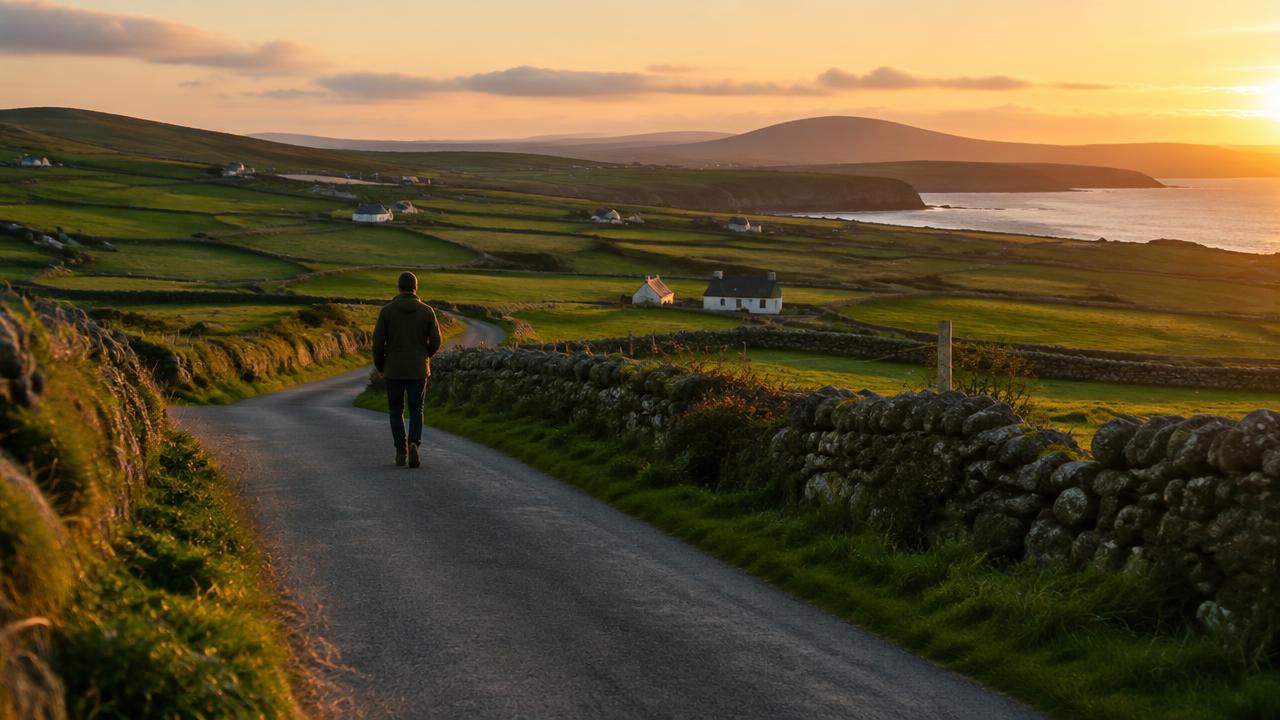
For someone living an hour from the nearest mental health service, the real barrier was never willpower, it was distance. Ireland's rural mental health push in 2025 and 2026 has been about shrinking that distance, one telehealth call, mart visit and shed meeting at a time, bringing support to where people already are rather than asking them to travel for it.
A national digital strategy built with rural access in mind
In February 2026, the HSE and Department of Health launched the Sharing the Vision Digital Mental Health Strategy 2026-2030 at the third annual Digital Mental Health Conference, held in partnership with the University of Limerick. Minister for Mental Health Mary Butler said the strategy is about harnessing digital technology so people can access safe, effective mental health information, tools and services anytime, anywhere, and framed it specifically as a way to address inequalities in access.
It builds on the HSE's Telehealth Roadmap 2024-2027, which set out how video and phone consultations, remote monitoring and online therapies can cut down on travel time and time away from work, school and family, benefits that matter most for people living furthest from a clinic. As part of the HSE's wider 263 million euro digital-for-care capital plan for 2026, the health service is also expanding its virtual care programme, with the first acute virtual ward going live in the Western region in early 2026.
Budget 2026 also brought over 4 million euro in new funding for early intervention, digital and talking therapies, including 1 million euro specifically to implement the new digital mental health strategy, taking total investment in services such as online CBT and text-based supports past 7 million euro, alongside a newly ring-fenced fund for community-based supports.
Meeting farmers where they already are
Farming has some of the starkest access challenges in Irish mental health, and 2026 brought two major responses in the same year. In July, DCU's FarmFAMHealth project, funded by Research Ireland, published a report on the mental health of Irish farm family members and launched free, one-hour mental health awareness training designed specifically for that community. The training teaches people to spot signs of poor mental health in those around them and is being delivered free of charge in rural communities nationwide, explicitly aiming to reach people isolated from other forms of support.
Separately, the IFA announced the nationwide rollout of its 2026 Farmer Health Checks Programme, delivered with Croi Heart and Stroke Charity and funded by the Department of Agriculture, Food and the Marine, bringing mobile health units, including a mental wellbeing evaluation, to marts and agricultural shows around the country between July and October. IFA Farm Family and Social Affairs Chair Teresa Roche said farming can be physically demanding and isolating, with long hours and few chances to focus on personal wellbeing, which is exactly why the checks are delivered at locations that fit around a farmer's working day.
Teagasc's long-running On Feirm Ground programme, which trains agricultural advisors, vets and other professionals who regularly meet farmers to have conversations about wellbeing, won the Open University's Shooting Star Award in March 2026. The programme, now in its second phase and coordinated by the Men's Development Network with the Department of Agriculture, Department of Health and HSE, cites research showing that among farmers reporting stress, targeted support and early intervention helped reduce reported stress levels from 13.5% to 8% in a study population, underlining the value of catching problems early through people farmers already trust.
The State has continued to back that approach with money as well as words. The Department of Agriculture, Food and the Marine confirmed in September 2026 that it had allocated 3 million euro under Budget 2026 specifically for farm safety, health and wellbeing, co-funding On Feirm Ground 2 alongside the Department of Health and the HSE. The Department also ran an Open Call that awarded funding to 46 separate farm safety, health and wellbeing projects during the year, more than half of which include a dedicated focus on farmer mental health, with many also targeting rural isolation directly among the farming community.
Community connection through Men's Sheds
Men's Sheds have become one of rural Ireland's most valued informal mental health supports, offering a place to socialise, learn skills and push back against isolation. In May 2025, the Department of Rural and Community Development announced a 1 million euro funding package, distributed by the Irish Men's Sheds Association, offering grants of up to 3,000 euro to help around 450 sheds cover running costs like heating, insurance and utilities. By May 2026, the Department confirmed that funding had been paid in full to 369 Men's Sheds across the country, helping keep doors open in communities where a shed is often the only regular social outlet available.
The movement itself has kept growing alongside that funding. The Irish Men's Sheds Association now represents 484 active sheds across the Republic, with roughly 100,000 visits happening every week, and it expects the network to pass 500 sheds within the next year. In June 2026, the Association launched its Strategic Plan 2026-2030 at Tullow Men's Shed in County Carlow, with Minister of State Jennifer Murnane O'Connor formally unveiling a roadmap built around sustaining the movement's long-term future. The plan sits alongside the long-running Sheds for Life programme, a ten-week health and wellbeing course now completed by sheds in every county in the country, which marked five years in operation with an awards ceremony in Cavan in June 2026 recognising the shedders who took part.
Tackling loneliness beyond the farm gate
Isolation in rural Ireland is not confined to the farming community, and 2026 has brought fresh attention to just how widespread the problem is. The European Commission has found that Ireland has the highest levels of loneliness in Europe, with around one in five people experiencing loneliness most or all of the time, a finding that fed directly into a national conference on loneliness and health hosted by the Loneliness Taskforce Research Network and the charity ALONE in Dublin in May 2026. ALONE's own casework shows the scale of unmet need in rural areas: the charity has recorded a 165% increase in referrals nationally over the past three years, with local teams in counties such as Cavan and Monaghan actively recruiting more volunteers to keep pace with demand.
Researchers are also testing new tools to help older people in the most remote parts of the country stay connected. A University of Galway study published in June 2026 piloted home telepresence technology, effectively simple video-call devices set up in the home, with older adults living alone in remote Irish communities, finding the approach was readily adopted and well received by participants who took part in scheduled video interactions. ALONE's Pre-Budget Submission for 2027, launched in June 2026, has called for further investment in community and health services to address loneliness among older people living alone, arguing that early, practical support keeps people living independently and safely in their own homes for longer.
What it means for rural families
Taken together, these programmes amount to the most concerted effort yet to close the urban-rural gap in mental health support. A farmer in west Cork can now access a video consultation without a three-hour round trip, a mart visitor can get a free health check alongside the Saturday cattle sale, and an older person living alone can stay in regular contact through a simple home device. For families, the practical advice is to ask locally: GPs, IFA branches, Men's Sheds and ALONE county teams are all now front doors into support that simply did not exist in rural areas a few years ago.
The Bottom Line
Rural mental health support in Ireland is increasingly meeting people where they already are, on the farm, at the mart, in the local shed, or on a video call from the kitchen table, rather than expecting them to travel to a clinic. The new national digital mental health strategy, the FarmFAMHealth training rollout, the IFA's expanding health checks and continued backing for Men's Sheds and ALONE's outreach work all point the same way: support built around rural life, not office hours. It is early days for some of these programmes, but the direction is clear, and it is moving care closer to where rural communities actually are.
Health Pulse — Ireland's home for health and healthcare intelligence. Subscribe to the Pulse Network Briefing.