The Announcement
On 2 March 2026, Novo Nordisk confirmed a €432 million investment to expand and retrofit its manufacturing facility at Monksland, Athlone, County Westmeath. The investment will add a new tableting facility to the existing 45-acre site, significantly increasing production capacity for the company's oral GLP-1 medicines — including the Wegovy pill, which received FDA approval in December 2025 and launched in the United States in January 2026. The Athlone facility will serve as a critical manufacturing hub for markets outside the United States, producing the oral Wegovy formulation for Europe and other international markets as EU and other regulatory approvals follow.
The investment will sustain the existing 260 operational employees at the Monksland site, while construction of the new tableting plant is expected to generate up to 600 construction jobs through 2027 and 2028. Minister for Enterprise, Tourism and Employment Peter Burke described the investment as a “vote of confidence in Athlone and the Midlands” and said it “will help drive innovation, create highly skilled jobs and further strengthen Ireland's pharmaceutical ecosystem.” IDA Ireland backed the investment, in line with its broader strategy of positioning Ireland as a global hub for next-generation pharmaceutical manufacturing.
Why Athlone, and Why Now
The choice of Athlone for this particular investment reflects both the depth of Ireland's existing pharmaceutical manufacturing ecosystem in the Midlands and the specific history of the Monksland site. Novo Nordisk acquired the Athlone facility from Alkermes in late 2023, inheriting a site with established pharmaceutical manufacturing infrastructure, a trained workforce and a location well connected to the national road network and to Shannon and Dublin airports. The acquisition was followed, in 2024 and into 2025, by a period of operational adjustment as Novo Nordisk completed the transition from the previous Alkermes manufacturing activities. The €432 million commitment announced in March 2026 represents Novo Nordisk's definitive signal that Athlone is a long-term, strategic manufacturing location for the company — not a transitional asset.
The timing is driven by the global demand trajectory for GLP-1 medicines. Glucagon-like peptide-1 receptor agonists — the drug class that includes Ozempic, Wegovy and Eli Lilly's competing products Mounjaro and Zepbound — have become one of the fastest-growing categories in pharmaceutical history, driven by their demonstrated effectiveness in treating obesity, type 2 diabetes and, more recently, cardiovascular disease. Novo Nordisk's injectable Wegovy drove extraordinary revenue growth for the company from 2023 onward, but the oral formulation — a once-daily tablet rather than a weekly injection — is expected to significantly expand the addressable patient population by removing the barrier of self-injection that has prevented some eligible patients from starting treatment.
The US market for the Wegovy pill is already being served from US manufacturing facilities. Athlone's role is specifically to serve international markets — Europe, Asia Pacific and others — which means the Monksland investment is a direct bet on the global rollout of oral Wegovy following EU and other regulatory approvals. Novo Nordisk submitted oral semaglutide 25mg for obesity to the European Medicines Agency earlier this year, with a regulatory decision expected in the coming months. The Athlone facility will need to be production-ready to supply European pharmacies and healthcare systems as quickly as possible after that approval lands.
What GLP-1 Manufacturing Actually Involves
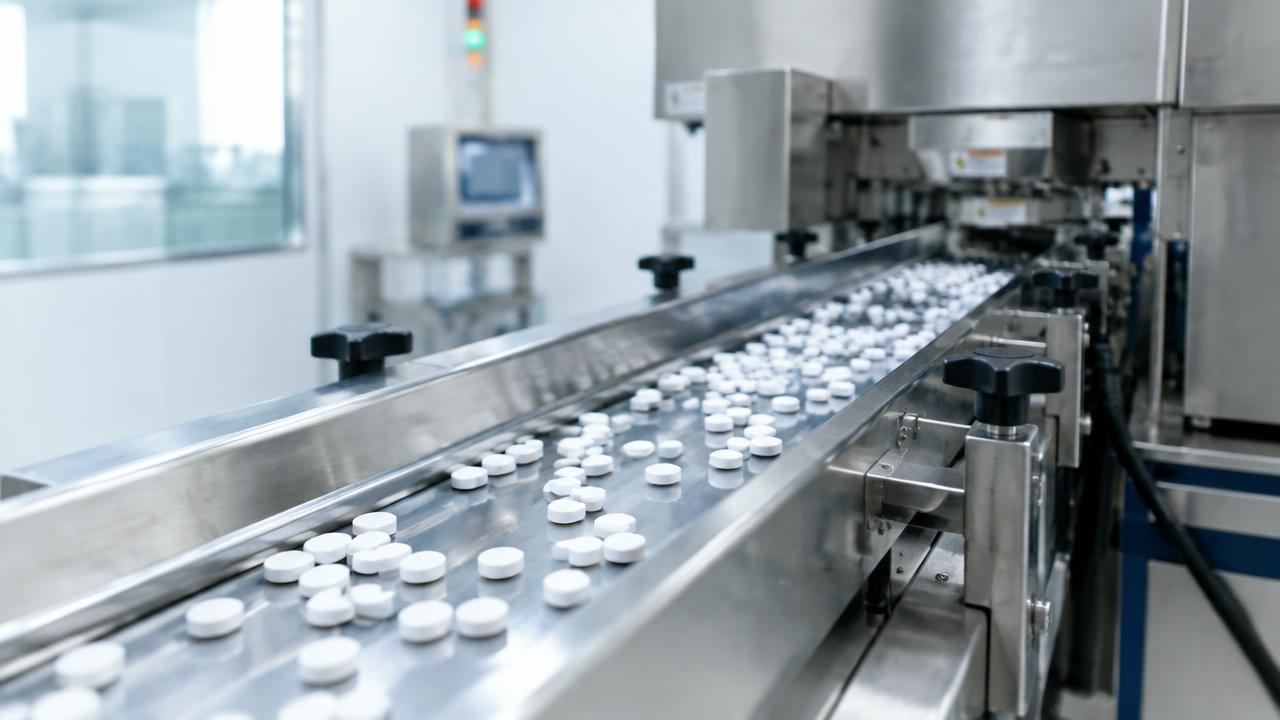
The oral Wegovy tablet is not a standard pharmaceutical tablet. Semaglutide, the active ingredient in both Ozempic and Wegovy, is a large peptide molecule — chemically complex, sensitive to digestive degradation, and requiring specialist formulation technology to be delivered effectively through the oral route rather than by injection. Novo Nordisk's oral semaglutide uses a proprietary absorption technology called SNAC (sodium N-[8-(2-hydroxybenzoyl)amino]caprylate) that protects the peptide from stomach acid and facilitates its absorption in the stomach wall. Manufacturing a tablet that reliably delivers this molecule at therapeutic doses across millions of patients requires precision tableting equipment, controlled manufacturing environments and rigorous quality assurance processes of exactly the kind that the Irish pharma manufacturing workforce — trained at facilities like NIBRT and working in GMP environments for decades — is equipped to provide.
This is precisely why Ireland, and Athlone specifically, is a credible location for this investment. The technical complexity of oral peptide manufacturing is a barrier to entry that limits where Novo Nordisk can credibly build capacity quickly, and Ireland's deep pool of experienced GMP manufacturing professionals, combined with a regulatory track record of consistent FDA and EMA inspection performance, reduces the risk of the production ramp-up that follows a major new facility investment.
The Competitive Context: Eli Lilly in Kinsale
The Novo Nordisk Athlone investment also needs to be understood in the context of the competitive dynamic between the two dominant GLP-1 manufacturers. Eli Lilly, whose tirzepatide products Mounjaro and Zepbound compete directly with Novo Nordisk's semaglutide portfolio, has a major manufacturing presence in Kinsale, County Cork, where key elements of its GLP-1 programme are produced. The Irish Examiner confirmed in 2026 that Kinsale produces key elements of the Zepbound supply. With both of the world's two dominant GLP-1 manufacturers now investing heavily in Irish manufacturing capacity — Novo Nordisk in Athlone, Eli Lilly in Kinsale — Ireland has become a strategically important manufacturing location for what is currently the most commercially significant drug class in the global pharmaceutical industry.
That concentration of GLP-1 manufacturing investment in Ireland is not accidental. It reflects the specific combination of capabilities — trained workforce, regulatory excellence, supply chain infrastructure, and an ecosystem of contract manufacturers, analytical labs and specialist service providers — that makes Ireland a reliable, scalable location for complex pharmaceutical manufacturing. IDA Ireland's Rory Mullen has been explicit that Ireland's competitive advantage in pharmaceutical manufacturing is no longer primarily about cost or tax but about the depth and quality of its manufacturing ecosystem, and the Novo Nordisk Athlone investment is one of the clearest recent demonstrations of what that ecosystem can attract.
What It Means for the Midlands
The Novo Nordisk investment lands in a Midlands region that has been in active economic transition over the past decade — moving away from its historical dependence on peat-based industries and building a more diversified economic base that includes pharmaceutical manufacturing, data centres, agri-food and increasingly digital services. The combination of Novo Nordisk's expanded Athlone operation with the broader pharmaceutical cluster developing across Westmeath, Longford and the surrounding counties represents exactly the kind of high-value, skilled employment that government policy has been trying to anchor in the region. Up to 600 construction jobs through 2027 and 2028, followed by sustained operational employment at a complex, high-value manufacturing site, is a meaningful economic contribution to a region that has not historically attracted pharmaceutical investment at this scale.
The Bottom Line
Novo Nordisk's €432 million Athlone investment is a direct, commercially driven bet on the global rollout of the Wegovy pill — and on Ireland's ability to manufacture a complex oral peptide at the quality and scale required to supply international markets. With Eli Lilly's GLP-1 manufacturing in Kinsale running in parallel, Ireland is now home to major production capacity for both of the world's leading GLP-1 programmes. That is a remarkable concentration of pharmaceutical investment for a country of 5.3 million people, and it speaks directly to the depth and reliability of Ireland's manufacturing ecosystem. For Athlone the effect is more immediate and more personal: 260 operational jobs retained on a site the company has owned since late 2023, up to 600 construction jobs through 2027 and 2028, and a Midlands town now sitting on the manufacturing path of one of the most sought-after medicines in the world.
Health Pulse — Ireland's home for health and healthcare intelligence. Subscribe to the Pulse Network Briefing.