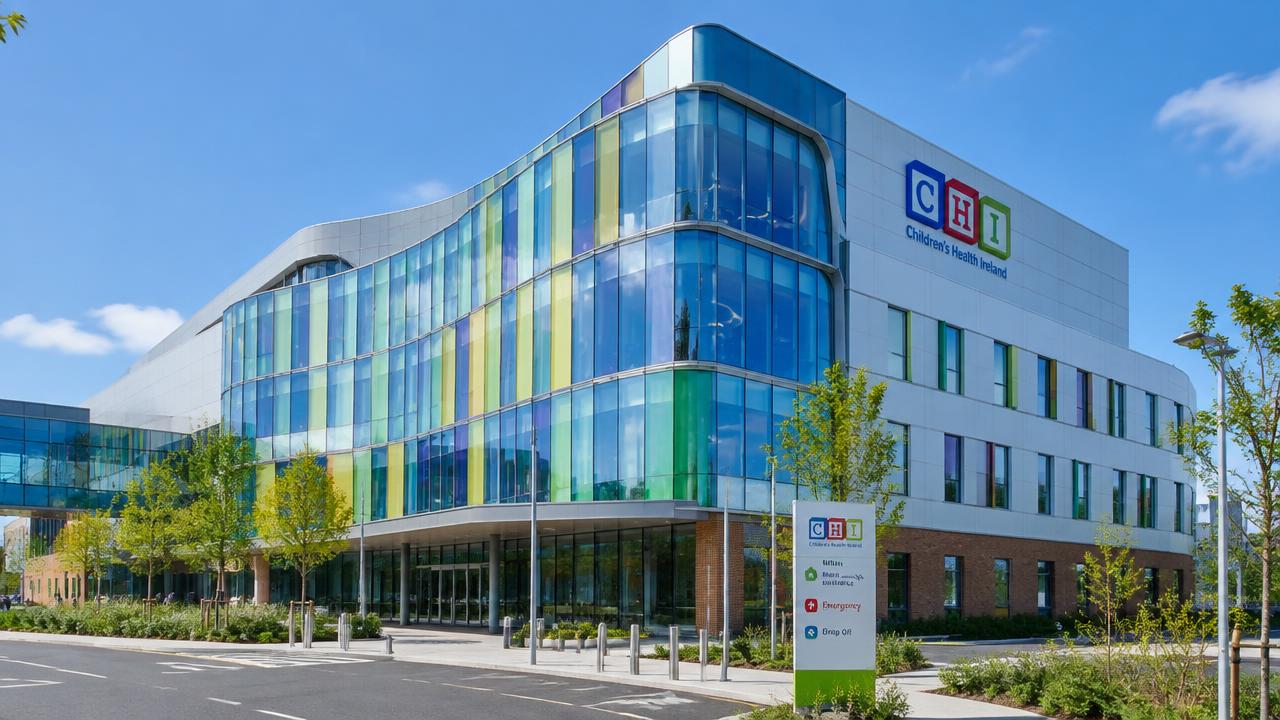
The National Children's Hospital Ireland was first formally proposed as a concept in 1993, when the Faculty of Paediatrics at the Royal College of Physicians of Ireland recommended consolidating the services of Dublin's three separate children's hospitals into a single national facility. The proposal sat on the shelf for over a decade. Planning and site selection consumed most of the 2000s. Construction contracts weren't signed until 2016, when BAM Ireland was awarded the main contract to build the hospital on the campus of St. James's Hospital in Dublin. The original contract specified a substantial completion date of late 2022. The cost was expected to be €650 million.
It is now June 2026. The hospital has not opened. BAM has missed 19 separate substantial completion dates. The latest cost projection is approximately €2.2 billion, more than three times the original estimate. There is still no confirmed opening date. The minister responsible, Jennifer Carroll MacNeill, told RTÉ Prime Time in April that while a timeline technically exists, "if you've experienced something 19 times, do you expect it to be different on the 20th?"
And yet, for all the delays and frustrations, the National Children's Hospital is closer to opening than it has ever been, and the progress being made inside the building in the first half of 2026 is the most tangible and concrete since construction began.
Where the Building Actually Is Right Now
The most recent verified progress data from Children's Health Ireland, published in March 2026, shows that CHI teams have been inside the building in phased early access since December 2025. Level 6, the ward block, has been fully fitted out. Early access to the ground floor — which houses the hospital's largest and most complex clinical areas including the emergency department and radiology imaging — was extended in March 2026. MRI scanners were successfully installed and commissioned to full magnetic power between late January and 20 February 2026, a significant clinical milestone. As of the latest PAC hearing in late April 2026, BAM indicated that over 4,000 of the hospital's 5,728 rooms had been offered for inspection, though the National Paediatric Hospital Development Board noted that a smaller number had been formally validated as compliant with the contract at that point.
The contractor is still resolving commissioning issues and reworking areas that did not meet quality standards first time. At the April PAC hearing, the NPHDB disclosed that there had been an "unprecedented 106,500 defects in the 5,728 rooms" that BAM was required to address — a figure that BAM disputed in its characterisation, attributing much of the rework to design revisions rather than contractor error. The NPHDB strongly disputed that framing. The dispute between the two parties over the causes of the delay is now the subject of independent commercial arbitration.
The Scale and Significance of What's Being Built
Amid the controversy over costs and delays, it's worth being precise about what the National Children's Hospital Ireland actually is, because the scale of what's been built is, by any measure, extraordinary. The hospital will be seven storeys high, with approximately 160,000 square metres of accommodation across 6,150 rooms, including an underground car park with 1,000 spaces. It will consolidate the services of three existing children's hospitals — Children's Health Ireland at Crumlin, at Temple Street and at Tallaght — into a single national tertiary centre. It will be the only children's hospital in Ireland providing the full range of specialist paediatric services, from neonatal intensive care and cardiac surgery to oncology, neurology and rare diseases, under one roof.
The clinical estate being fitted out includes 380 beds, 17 operating theatres, seven catheterisation laboratories, and critical care units across the full spectrum of paediatric specialisms. The emergency department is designed to handle the volume currently split across three separate facilities. The radiology suite includes the MRI scanners now installed and commissioned, alongside CT scanners, fluoroscopy suites and interventional radiology capabilities that will make it one of the most comprehensively equipped paediatric hospitals in Europe by capacity if not by opening date.
What Happens After BAM Hands It Over
Once BAM delivers substantial completion and formally hands the building over to Children's Health Ireland and the NPHDB, CHI has stated publicly that full operational commissioning will take a minimum of seven months. This commissioning phase is when the building is transformed from a construction site with equipment installed to a fully operational hospital. Staff training takes place. Clinical workflows are tested and validated. IT systems, including the Electronic Health Record infrastructure already being progressively installed, are go-live tested. Supply chains for consumables, medicines and specialist equipment are established and tested. Emergency protocols are rehearsed. The commissioning period is not a formality — it is the phase that determines whether the hospital opens safely, and CHI has been explicit that it cannot be shortened below seven months without unacceptable clinical risk.
Children's Health Ireland CEO Lucy Nugent has raised the question of whether commissioning should begin in winter — with flu season pressures already bearing on the existing three children's hospitals — or wait for a spring opening. That decision will depend on when BAM achieves substantial completion and whether the completed building meets the clinical quality standards CHI requires. The Public Accounts Committee was told in April that a new programme update from BAM was due within 15 days of the hearing. The Oireachtas Committee on Health chair Pádraig Rice said that without a credible, resource-loaded completion programme, projections for an autumn 2026 or early 2027 opening remained speculative.
The Political and Financial Accountability
The cost trajectory of the National Children's Hospital Ireland is, by any measure, one of the most significant public expenditure overruns in the history of the State. From €650 million at contract signing to a current projection of approximately €2.2 billion, the project has consumed capital that was not available for other health infrastructure priorities. The IMO has noted that the capital diverted toward the children's hospital has constrained investment in bed capacity, diagnostics and primary care infrastructure elsewhere in the system. The PAC has repeatedly questioned both the original contract and the oversight mechanisms that allowed overruns to compound without earlier intervention.
Minister Carroll MacNeill has acknowledged that "lessons have been learned" from the contracting approach and the absence of sufficient contingency planning for a project of this complexity. A health infrastructure bill is being considered that would give future large-scale projects clearer governance, stronger contractual enforcement mechanisms and more robust oversight. The Taoiseach, Micheál Martin, said in May that there is "no excuse" for the delays and that BAM needs to put more people on site and fulfil its commitments. BAM, meanwhile, has pointed to 25,000 design revisions — which the NPHDB characterises as normal construction drawing updates rather than scope changes — as a primary cause of the delay.
The Bottom Line
The National Children's Hospital Ireland has missed 19 completion deadlines, cost three times its original estimate, and become a byword for public procurement failure. It has also, as of mid-2026, never been closer to opening. CHI teams are inside the building, MRI scanners are installed and operational, and the most complex clinical areas are in active commissioning preparation. When it does open — whether in late 2026 or 2027 — it will be a genuinely transformative addition to Irish healthcare, consolidating paediatric services that have been delivered across three ageing facilities into a single, comprehensively equipped national centre. The story of how it got here is one Ireland's health system should not repeat. The story of what it will deliver, when it finally opens its doors, is a different and better one.
Health Pulse — Ireland's home for health and healthcare intelligence. Subscribe to the Pulse Network Briefing.