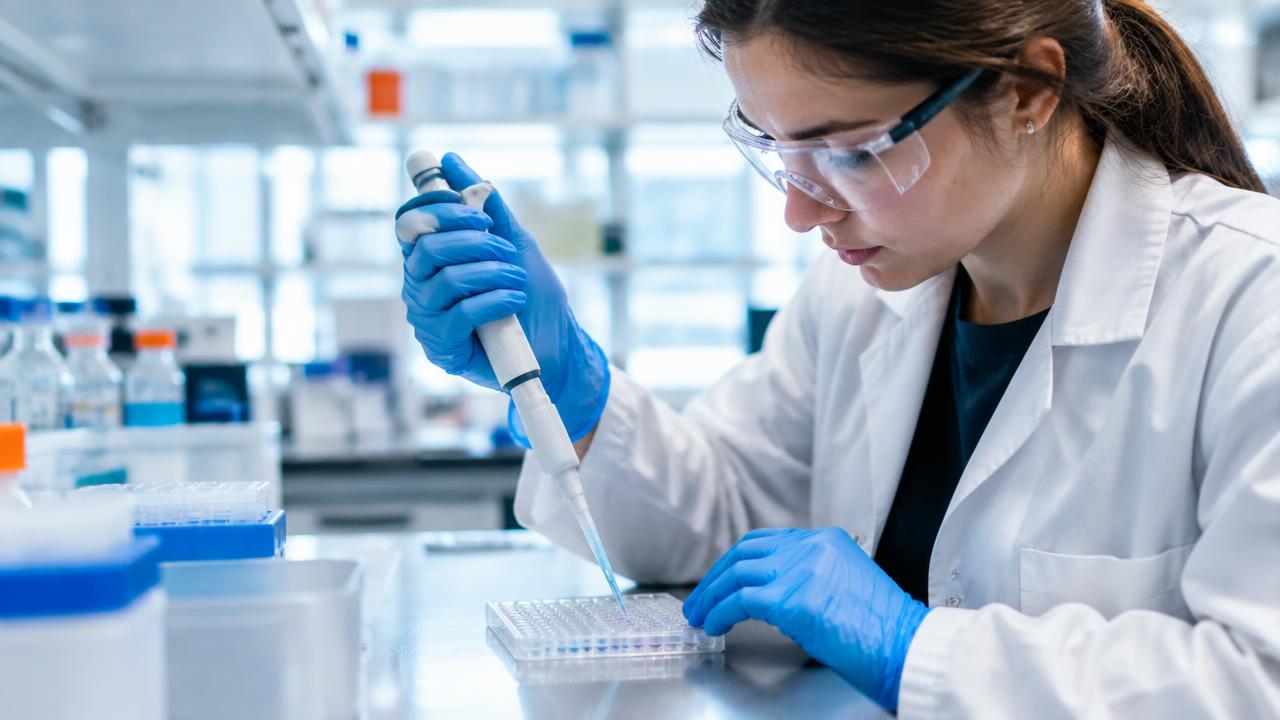
A lifetime of flare-ups, hospital visits and trial-and-error medication: that's what inflammatory bowel disease - Crohn's disease and ulcerative colitis - can mean for patients. Irish researchers, working across multiple hospitals and universities, published a run of studies in 2025 and 2026 aimed at making treatment more precise and, for children in particular, easier to live with.
A food-based treatment that's easier for children to stick to
One of the most patient-friendly advances is dietary rather than pharmaceutical. A study involving children from Ireland and around the world found that a food-based dietary treatment, the Crohn's Disease Exclusion Diet (CDED), could help children and young people with Crohn's disease stay symptom-free for longer. The results were published in the journal Clinical Gastroenterology and Hepatology and reported on in April 2025.
Professor Séamus Hussey, a Consultant Gastroenterologist at Children's Health Ireland (CHI) and researcher on the study, explained the significance: existing treatment, Exclusive Enteral Nutrition (EEN), where children drink only liquid nutrition for six to eight weeks, is effective but extremely hard for families to sustain because of its limited, bland options.
The trial, which involved 56 children, found that just two weeks of EEN followed by CDED was effective at inducing remission, with most children on CDED maintaining remission for up to 24 weeks. Hussey said this was the first time researchers had shown a longer-term dietary therapy could help treat certain Crohn's patients, moving treatment options 'from the medicine cupboard to the kitchen'.
Michelle Hurley of Children's Health Ireland at Crumlin was among the Irish clinicians who worked on the international trial, which recruited children across multiple countries and randomised them either to CDED or to a longer eight-week course of EEN, with all participants followed for 24 weeks. Recruitment fell short of target because of the Covid-19 pandemic, leaving the study somewhat underpowered - but the direction of the results, families finding CDED easier to sustain without losing ground on remission, was consistent enough that Hussey and colleagues describe it as a genuine, usable step forward for paediatric gastroenterology teams weighing up options with families in clinic.
Testing drugs on a patient's own gut tissue
A different piece of work is aimed squarely at cutting out guesswork in drug choice. At St James's Hospital and Trinity College Dublin, researchers led by Dr Roisin Corcoran presented work in December 2025 on using patient-derived IBD tissue explants - small biopsy samples grown outside the body - to test how three licensed biologic drugs (infliximab, ustekinumab and vedolizumab) affect inflammatory protein secretion, comparing results to how each patient actually responded to the same drug in real life.
The aim, presented to the Irish Society of Gastroenterology, is to build a precision medicine tool that could eventually help doctors predict which biologic drug will work best for an individual patient before committing them to months of treatment - potentially cutting out costly and uncomfortable trial-and-error.
Learning from patients already on combination therapy
Meanwhile, a study spanning nine academic centres across Ireland, published in 2026, looked at 109 IBD patients who had moved on to combination advanced therapies - using two biological drugs together, or one biologic plus a small-molecule drug - after failing to respond to standard treatment. It found corticosteroid-free clinical response rates of 39% at 12 weeks and 38% at 52 weeks, giving Irish clinicians real-world Irish data on how well these combinations work and what they cost, with annual maintenance costs ranging from €17,560 to €30,724 per patient.
Separately, researchers connected to APC Microbiome Ireland, the SFI-funded research centre based at University College Cork, published a review in September 2025 on how existing IBD therapeutics interact with the gut microbiome, identifying microbiome composition before treatment as a potential biomarker for how well a therapy will work - opening the door to better-targeted prescribing in future.
Better endoscopy, measured against national standards
Diagnosis and monitoring have also come under scrutiny. A national endoscopy dataset analysis led by researchers including Fiona Jones, Aonghus Lavelle, Glen Doherty and colleagues across multiple Irish gastroenterology units examined how well Irish IBD endoscopy services meet quality benchmarks recently set out by the European Society of Gastrointestinal Endoscopy, published in a 2026 review in the Journal of Crohn's and Colitis. Getting basic colonoscopy quality right - checking bowel preparation, withdrawal time and complete examination of the colon - matters because these same procedures are used to both diagnose IBD and track whether treatment is working.
Cork-based APC Microbiome Ireland researchers, including Professor Marietta Iacucci and colleagues, have also been developing spatio-temporal artificial intelligence tools that assess inflammation across a full colonoscopy video for ulcerative colitis, rather than relying on a handful of still frames, a 2026 study published in the journal Endoscopy found. Reviewing every frame of a procedure rather than a small selection could make it easier to spot patchy or subtle inflammation that a doctor might otherwise miss during a routine outpatient examination, and to track more precisely whether a patient's disease is improving between visits.
Reading tissue damage more precisely, and listening to patients directly
A further APC Microbiome Ireland study, published in the Journal of Crohn's and Colitis in mid-2026, looked at whether small, standard histology changes in gut tissue samples could reveal deeper damage to the intestinal barrier. The team, including Antonio Lo Bello, Irene Zammarchi, Cecilia Pugliano and Professor Marietta Iacucci with colleagues from Cork University Hospital, studied 88 people with IBD - 52 with Crohn's disease and 36 with ulcerative colitis - linking tissue scoring across 131 biopsies with advanced endoscopic imaging and protein analysis. The aim is a more complete picture of gut inflammation that connects what a pathologist sees under the microscope with the actual state of the gut lining's protective barrier.
Researchers at APC Microbiome Ireland have also been formalising how patients themselves shape the direction of this research. A paper in the Journal of Crohn's and Colitis by Michelle O'Riordan and Professor Subrata Ghosh, co-written with members of the centre's Public Research Engagement Panel, described how people living with IBD are partnering directly with researchers and clinicians to help design studies, so that the questions being asked reflect the everyday realities of living with the condition rather than being set by scientists alone.
Taken alongside the earlier tissue-testing and endoscopy work, these two additions - finer-grained tissue analysis and a structured role for patients in shaping the research agenda - point to an approach that is becoming more rigorous about what it measures and more accountable to the people it is meant to help.
Looking beyond the gut itself
Irish researchers have also been part of wider international efforts to understand what drives Crohn's disease beyond the bowel wall itself. International studies with Irish contributors published through 2026 have examined how gut inflammation interacts with the nervous system, part of a broader shift in IBD research towards understanding the whole-body picture, including the so-called gut-brain axis, rather than treating Crohn's and colitis purely as local bowel conditions.
That wider lens matters for patients because IBD is increasingly understood to affect energy, mood and thinking clearly alongside the more familiar bowel symptoms, and Irish clinicians involved in these international collaborations say a fuller picture of what drives an individual patient's disease course could eventually feed into the same kind of precision-medicine approach being developed for choosing biologic drugs - matching not just the right medicine, but the right broader care plan, to each patient.
Put it all together with the dietary, tissue-testing and combination-therapy studies already under way, and this growing focus on endoscopy quality, AI-assisted monitoring and whole-body drivers of disease shows Irish IBD research working across the full patient journey, from how a diagnosis is first confirmed through to how a treatment plan is chosen and refined over years of care.
The Bottom Line
Irish IBD research in 2025 and 2026 is tackling the problem from several angles at once: making paediatric treatment more liveable through diet, building tools to match patients to the right biologic drug before they start it, and gathering real Irish outcomes data on newer combination therapies. None of this is a single cure, but together it points to IBD care in Ireland becoming steadily more personalised and evidence-based.
Health Pulse — Ireland's home for health and healthcare intelligence. Subscribe to the Pulse Network Briefing.