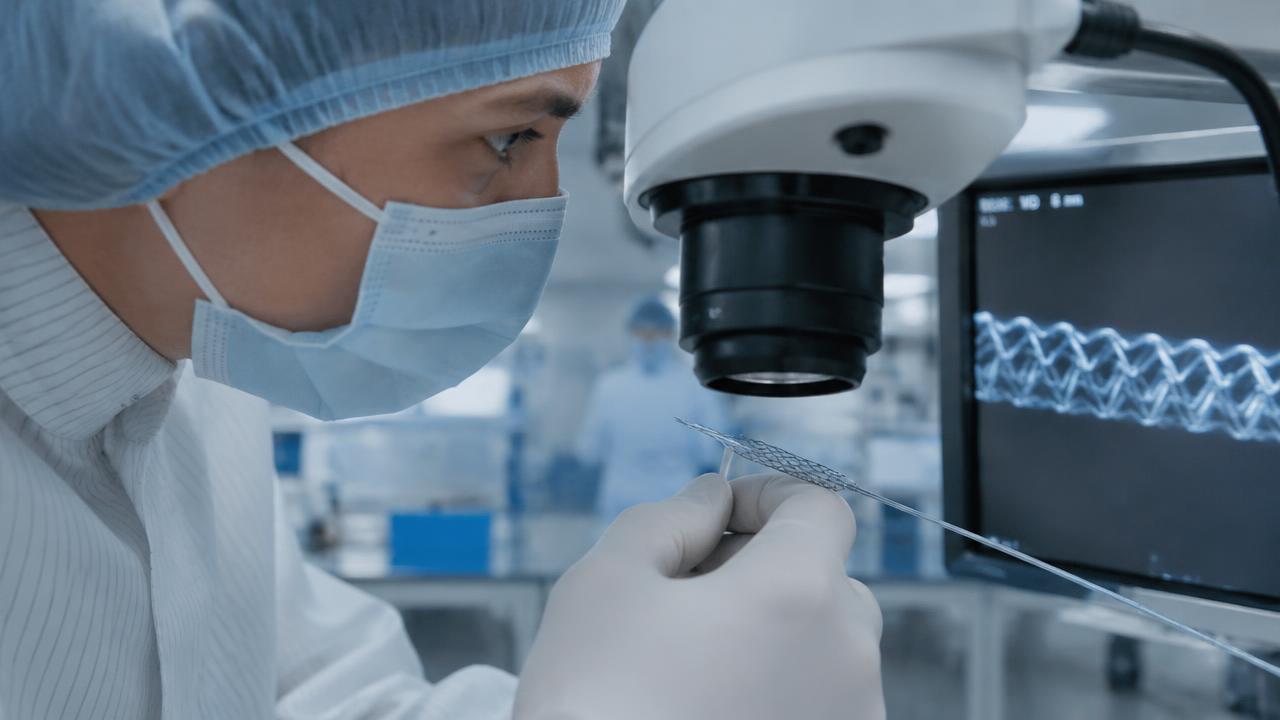
Galway is the medtech capital of Europe. That is not a marketing claim — it is a description of a physical reality built over forty years of sustained investment by the world's largest medical device companies, reinforced in 2026 by two significant announcements that signal continued confidence in the city's position.
The Two Announcements That Matter
In May 2026, Medtronic — whose principal executive office is in Galway and which has invested approximately €11 billion in Ireland over the past forty years, including €1.2 billion in research and development — announced the establishment of a European software hub in Galway focused on care systems for cardiac patients.
The move follows Medtronic's expansion of its London office into a global hub for artificial intelligence and robotics in surgery. The Galway software hub is a complementary investment — positioning Ireland specifically within Medtronic's digital health and connected care strategy, and putting software engineering talent alongside the device engineering that has anchored the company's Galway operation for decades.
In April 2026, Boston Scientific announced plans to invest $88.5 million to expand its research and development capabilities in Galway. Boston Scientific has been one of the most consistent investors in the Irish medtech ecosystem, and this latest commitment reinforces the company's view of Galway as a strategic location for device innovation, particularly in structural heart technology.
Together, these two announcements send a clear signal from two of the world's largest medtech companies: Ireland's position is not being reconsidered — it is being deepened. Medtronic and Boston Scientific between them employ close to 8,000 people in Galway, according to IDA Ireland, and both are adding higher-value engineering and software work on top of that existing base rather than looking elsewhere for it.
Forty Years in the Making
It is worth pausing on why Galway, and not somewhere else, keeps winning this kind of investment. The city's medtech story began in the late 1980s, when the first device manufacturers set up on its industrial estates, drawn by proximity to third-level education and a workforce willing to learn precision manufacturing from scratch. Four decades on, that early bet has compounded into something genuinely difficult for a rival region to copy.
According to IDA Ireland, the medical devices sector across Galway, Mayo and Roscommon employs around 16,000 people, roughly half of them at Medtronic and Boston Scientific, with the rest spread across manufacturers and suppliers including Aerogen, Hollister, TE Connectivity, Harmac Medical and Zimmer Biomet. The West of Ireland hosts more than 130 multinational companies employing over 31,000 people, IDA Ireland says, and recent arrivals — among them the glucose monitoring maker Dexcom, which chose Athenry for its first European facility — are choosing Galway because the supply chain, the contract manufacturers and the regulatory expertise already exist on the doorstep.
That is the real advantage a forty-year cluster provides. A device company setting up today does not need to build a local supply chain from nothing — it can draw on contract manufacturers and specialist suppliers that already understand medical device quality standards, which is part of why the cluster keeps growing rather than simply holding its size.
The Talent Pipeline
None of that infrastructure matters without engineers to staff it, and this is where Galway's two third-level institutions do much of the quiet work. The University of Galway's biomedical engineering programmes send graduates directly into the device industry every year, many of them having already completed lengthy work placements inside Medtronic or Boston Scientific's research and development teams before they finish their degrees. Its Bioinnovate Ireland programme, run in partnership with clinicians and industry, trains engineers to identify unmet clinical needs and turn them into device concepts — a pipeline that feeds both the multinationals and the indigenous start-up scene.
Atlantic Technological University, based across its Galway City campus, complements that pipeline with more specialised, industry-facing programmes. Its Higher Diploma in Medical Technology Regulatory Affairs, developed jointly with the University of Galway and delivered through the Irish Medtech Springboard scheme, was built specifically to meet employer demand for staff who understand European medical device regulation — one of the less glamorous but most persistent skills gaps the sector reports. Together, the two institutions mean a Galway-based device company can recruit locally at every level, from process engineers on the factory floor to regulatory affairs specialists preparing a product for the US and European markets.
That local pipeline is a large part of why global companies keep adding investment here rather than starting again somewhere with cheaper labour but no comparable depth of trained people. Building a device engineering team from scratch takes years; growing one inside an established Galway cluster, with graduates arriving every summer already familiar with the industry, takes considerably less.
The Indigenous Sector Is Growing
Alongside the multinational investment, Ireland's indigenous medtech sector is producing companies of genuine global ambition, several of them Galway-based and drawing directly on the talent and expertise the multinationals have spent decades cultivating.
ICS Medical Devices, a Galway-based catheter manufacturer founded in 2019, announced the creation of 72 new jobs by 2028, supported by €1.5 million in Enterprise Ireland funding. The company specialises in contract design, development and manufacturing for minimally invasive catheter technologies serving the structural heart, neurovascular and endovascular therapy markets — precisely the fields in which Boston Scientific and Medtronic have built their Galway operations.
AuriGen Medical, also based in Galway, is developing a first-of-its-kind implant that integrates stroke prevention, arrhythmia management and heart failure monitoring into a single device with smart sensors transmitting real-time data to clinicians.
LaNua, a UCD spin-out founded in 2024, raised $6.3 million in seed funding to develop a next-generation device for treating internal bleeding, vascular malformations and tumours. Its founders are a reminder that Galway's cluster now pulls in talent and ideas from beyond the city itself, drawing on Ireland's wider network of university spin-outs and specialist investors.
These companies represent a new generation of Irish medtech — university spin-outs and indigenous startups addressing specific clinical problems with genuinely novel technology, backed by Enterprise Ireland and international venture capital. It is also worth being honest about the pressure the sector is under. US tariffs on medical devices are applying €1.2 billion in additional costs to Irish medtech products exported to the American market, according to Ibec's Irish Medtech pre-budget submission — a real cost for companies whose primary market is the United States. The industry's response has been constructive rather than defensive: Ibec has pressed for expanded R&D tax credits, further investment in talent development and a dedicated Office of Life Sciences within the Department of Enterprise, Tourism and Employment. None of the companies profiled here has signalled any pullback in Ireland as a result — if anything, the scale of continued investment suggests the sector sees the tariff issue as a cost to be managed, not a reason to relocate.
Research Ireland's €17 Million Infrastructure Investment
In April 2026, Research Ireland announced €17 million in infrastructure investment across AI, medtech and related fields. The allocation includes €1.97 million for a national medical device innovation research facility, developed in partnership between the University of Galway and RCSI — two institutions already at the heart of Ireland's medtech ecosystem.
The investment signals continued state commitment to building the research infrastructure that connects academic innovation with commercial application — the pipeline through which the next generation of Irish medtech companies will emerge. Combined with the graduates flowing out of the University of Galway and Atlantic Technological University each year, and the industrial base built up over four decades, it gives Galway something rare: a self-reinforcing loop in which research funding, talent, suppliers and multinational investment each make the others more likely to keep arriving.
For the wider region, that means steady, well-paid engineering employment that does not depend on any single company's fortunes. If a smaller supplier scales back, the cluster around it — the contract manufacturers, the consultants, the graduate pipeline — is large enough to absorb the change. That resilience is what forty years of sustained investment has actually bought the city.
The Bottom Line
Ireland's medtech sector in 2026 is defined by a combination of multinational depth and indigenous ambition that few European countries can match. The Medtronic and Boston Scientific announcements are the headline acts. The ICS Medical, AuriGen and LaNua stories are the ones that will define the sector's next chapter.
Galway's position as Europe's medtech capital is not merely historical. It is being actively renewed — by the companies investing here, the researchers building here, the graduates of the University of Galway and Atlantic Technological University filling its labs and factory floors, and the state supporting the infrastructure that makes it possible.