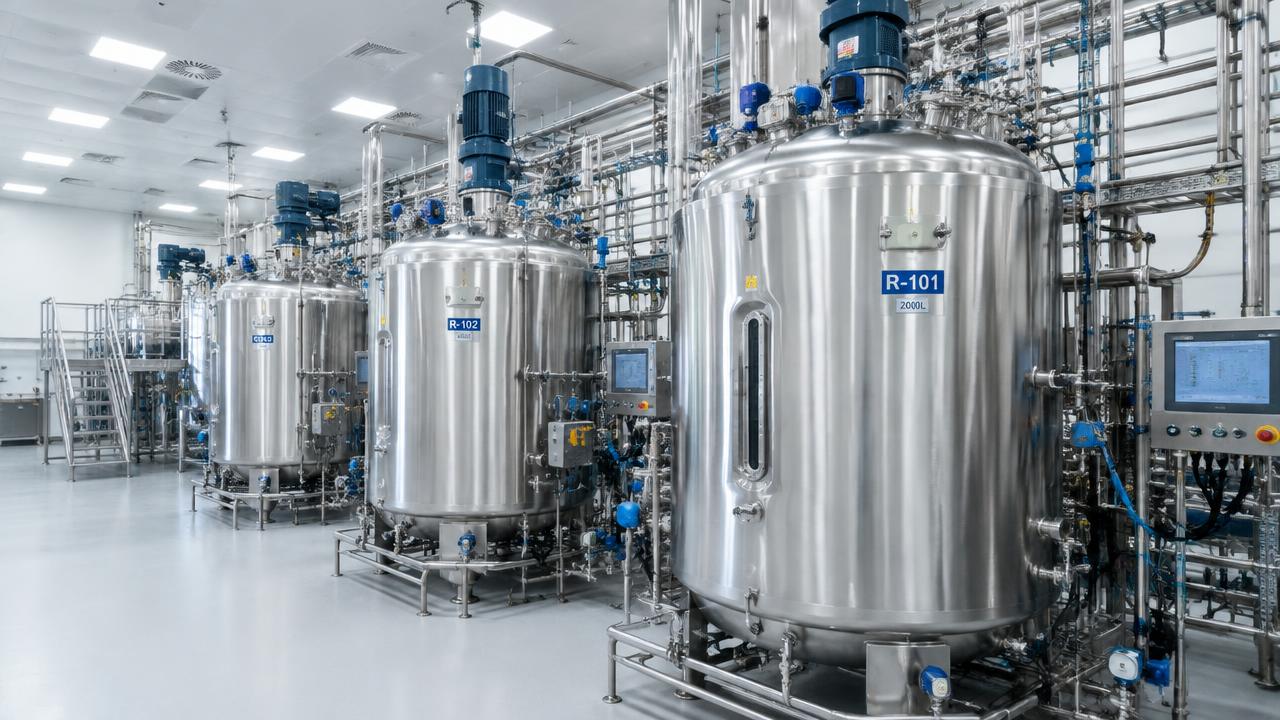
Ireland is the third-largest pharmaceutical exporter in the world. That is not a projection or an aspiration — it is the current reality of a sector that has been built steadily over six decades and now generates €130 billion in exports annually.
The scale of what has been built in Ireland is frequently underappreciated. Understanding the full picture matters for career decisions, investment context and anyone assessing Ireland's long-term economic trajectory. The Department of Enterprise, Trade and Employment puts the sector's footprint at circa 100,000 jobs and over €130 billion in exports, describing it as a cornerstone of Ireland's economic success.
How Ireland Got Here
The foundations were laid in the 1960s when Ireland made a deliberate strategic decision to open its economy to international industry. Pfizer established operations in Ringaskiddy, Cork. Merck arrived in Ballydine, Tipperary. Over the following decades, the cluster grew — first in small molecule manufacturing, then expanding into biologics, cell and gene therapies and advanced manufacturing technologies.
Today Ireland hosts 25 large-scale biologics facilities and 75 small molecule facilities. Total foreign direct investment in the sector stands at €15 billion. The workforce exceeds 50,000 people directly employed in pharmaceutical and biopharma manufacturing, a number that does not capture the extensive downstream employment in supply chain, professional services, logistics and infrastructure. Ireland's biopharma industry is forecast to add a further 21,000 jobs by 2027.
The pace of growth has accelerated sharply. Goodbody's chief economist Dermot O'Leary, in a report for the Irish Pharmaceutical Healthcare Association published in March 2026, found pharma exports reached €139 billion in 2025 — the highest on record — representing 53 per cent of Irish goods exports and 41 per cent of modified gross national income. The same report found around 75,000 people work in pharma manufacturing and related activities, with 28,000 in manufacturing roles directly, and that the sector paid over 15 per cent of Ireland's corporation tax in 2024. Much of that surge has come from ingredients used in weight-loss medicines: exports of hormones and their derivatives, including raw materials behind GLP-1 drugs such as semaglutide and tirzepatide, rose from €14 billion in 2024 to €51 billion in 2025.
Beyond Cork and Limerick
The popular image of Irish biopharma still centres on the Cork harbour cluster and the Limerick–Shannon corridor, and for good reason — both remain the industrial heartland of the sector. Eli Lilly's Kinsale site at Dunderrow in Cork already employs over 1,300 people, and the company also runs a major facility in Limerick, a reminder of how concentrated the top end of the industry still is. But the geography of investment is widening. IDA Ireland's December 2025 whitepaper on the future of biopharma manufacturing, developed with a roundtable chaired by NIBRT chief executive Darrin Morrissey, points to a sector building capability in newer locations and newer therapy types, including cell, gene and RNA-based therapies. For hubs beyond the traditional clusters, that spread is gradually translating into local jobs in manufacturing, engineering, quality and supply chain roles.
Regional spread matters because biopharma employment is not just about the factory floor. Every large-scale facility draws in contractors, engineering firms, validation specialists and logistics providers, and that ecosystem effect radiates outward from wherever a plant is sited — meaning a career in the sector no longer depends on living near Cork or the Shannon estuary.
From Greenfield Building to Digital, AI-Enabled Manufacturing
The sector is changing how it grows. The era of large greenfield construction — the facility builds that defined investment announcements through the 2010s and early 2020s — is giving way to digital transformation and operational modernisation. Companies that have already built their Irish facilities are now investing in automation, AI-enabled manufacturing and digital quality systems rather than pouring concrete for new sites. IDA Ireland's whitepaper frames digital and AI-powered manufacturing as a central theme of the sector's next phase, alongside its growing capability in advanced therapies.
The skills in demand in 2026 are not those of five years ago. Digital, data and automation competencies, combined with regulatory and quality expertise, are what employers are actively seeking. Increasingly, a "manufacturing job" in Irish biopharma means working alongside sensors, data dashboards and automated systems rather than purely manual process work.
The BioPharmaChem Ireland Sustainability and Responsible Care Report 2026, published in March, documented a sector that grew pharmaceutical exports 29 per cent to €99.9 billion in 2024 while cutting electricity-related carbon dioxide emissions by 30.5 per cent — evidence the sector is managing the sustainability transition without sacrificing growth, even as it modernises rather than simply builds.
How the Sector Is Staffed and Trained
None of this happens without a training pipeline to match it. The National Institute for Bioprocessing Research and Training, based in Dublin, is the sector's dedicated training and research centre, offering short courses, university-linked programmes and a simulated GxP training facility used across the industry, from drug substance and drug product manufacturing through to data analytics. NIBRT's Springboard+ programmes, co-funded by Government and the European Union, give people who are unemployed, returning to work or currently employed a route into biopharma careers through free or heavily subsidised courses, with 2026 applications already open.
In November 2025, BioPharmaChem Skillnet launched its new BioPharmaChem Skills Framework at the sector's BioPharma Skills Forum. Funded by Skillnet Ireland and developed with industry partners in response to an Expert Group on Future Skills Needs recommendation, the framework maps the sector's key roles, career pathways and competencies. Together with NIBRT's programmes and Ibec's BioPharmaChem division, it shows a sector investing as deliberately in people as it once did in bricks and mortar.
The Tariff Question
The introduction of US pharmaceutical tariffs, and Ireland's exposure as a major supplier to the American market, has been a dominant concern through 2025 and into 2026. The Department of Enterprise, Trade and Employment notes North America takes 42 per cent of Ireland's pharma exports, with 41.5 per cent going to Europe, and that the relationship flows both ways: Ireland is the sixth largest source of foreign direct investment into the United States globally, and the third largest from the EU after Germany and France.
The evidence suggests Ireland's position has remained resilient. Goodbody's March 2026 report notes US tariffs on pharmaceuticals have so far been averted, even as policy risks persist. Regulatory reliability, consistent inspection outcomes, established supply chains and the difficulty of replicating Ireland's manufacturing ecosystem elsewhere have meant the disruption many feared has, so far, been less severe. Industry's response has been constructive rather than defensive — continued investment and hiring, and a consistent case, made by IDA Ireland, Ibec and Government departments alike, for why Ireland remains the right long-term base for global biopharma manufacturing. That resilience is not unconditional: the medium-term trajectory of US trade policy remains uncertain.
For Those Considering a Career in Irish Biopharma
The opportunity remains substantial. Quality assurance, regulatory affairs, manufacturing sciences, process engineering and increasingly data and digital roles are all areas of sustained hiring. Regional diversification — investment spreading beyond Cork and Limerick into Athlone, Dundalk, Shannon and other locations — is creating opportunities outside the major cities. With NIBRT's Springboard+ places, BioPharmaChem Skillnet's new career-pathway framework and employers recruiting for digital and automation skills alongside traditional quality and regulatory expertise, there are now more structured routes into the sector than at almost any point in its history.
Ireland's position as the world's third-largest pharmaceutical exporter was not built by accident. It was built by consistent investment in the right infrastructure, the right skills and the right regulatory environment. The next chapter of that story is being written now, in training centres and on factory floors from Cork to Athlone as much as in the boardrooms that decide where global manufacturing capacity gets placed.
The Bottom Line
Ireland's biopharma sector has moved well past the point where its scale needs talking up — €130 billion-plus in exports, close to 100,000 jobs and a training pipeline through NIBRT and BioPharmaChem Skillnet being rebuilt for a digital, AI-enabled manufacturing era, all while the industry navigates US tariff uncertainty from a position of genuine strength rather than fear. For anyone weighing a career in the sector, or simply trying to understand where Ireland's economic ballast actually comes from, the answer is increasingly clear: this is no longer a story about a handful of factories in Cork and Limerick, but about a national industry deepening its roots, spreading its regional footprint and retraining its own workforce for whatever comes next.
Health Pulse — Ireland's home for health and healthcare intelligence. Subscribe to the Pulse Network Briefing.
← Back to Health Pulse